The creation of high-quality 3D assets used to require a combination of technical expertise as well as artistic talent, which took significant time. Designers had to manually create shapes and apply textures, alter lighting, and prepare files for different platforms. Artificial intelligence has transformed this process. AI-powered 3D modeling tools allow creators to create quickly detailed assets from just a simple text message or image.
This change will make 3D design accessible to experienced and novices, which allows the production of 3D designs to speed up and more imaginative experiments.
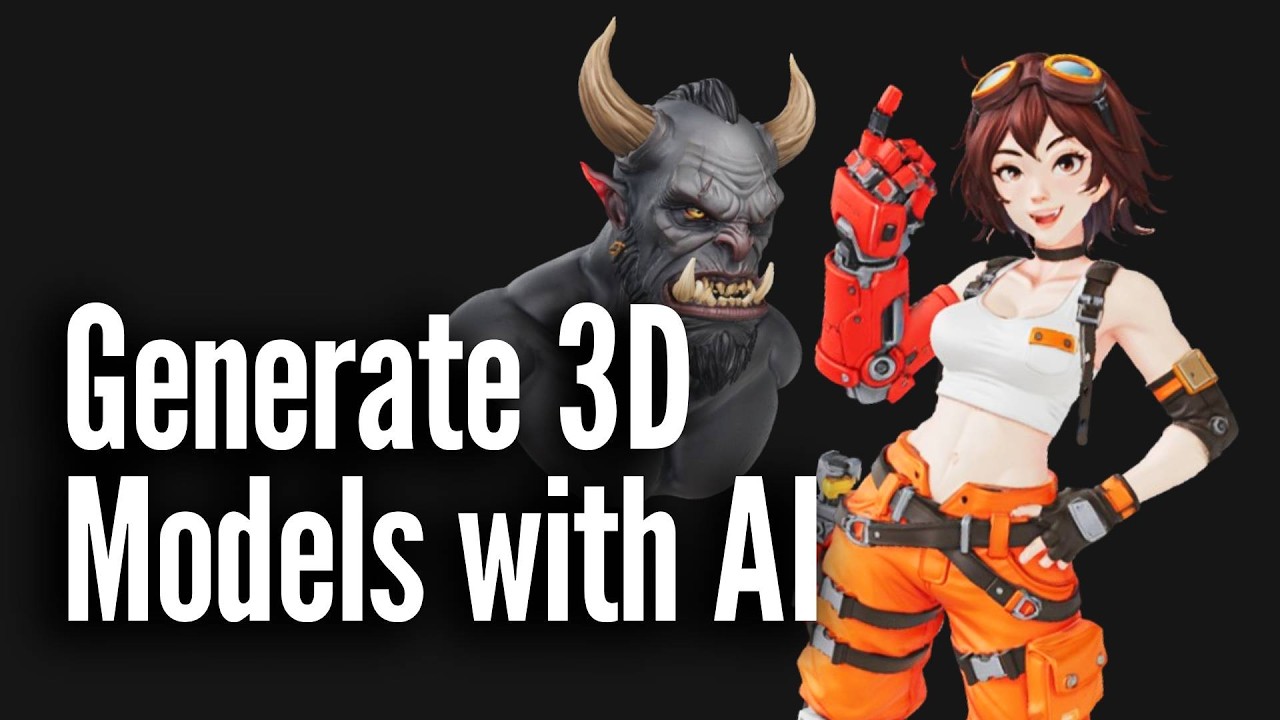
In a matter of minutes, you can go from picture to 3D model within a matter of minutes.
Image to 3D Model technology is among of the most exciting developments in this area. Artificial intelligence employs images to identify shapes and depths. It then reconstructs the 3D model.
This capability is particularly useful in industries that rely on speed and visual accuracy. Game developers can design and prototype their objects quickly, architects can see structures before construction begins and product designers are able to explore ideas without lengthy modeling sessions. Teachers and marketers are beginning to realize the importance of turning images into interactive 3D-based content.
Time savings are substantial. What was once a long process of texturing, modeling, and optimizing can now be done in a fraction of the time that allows teams to focus on improving ideas instead of building every component manually.
AI 3D Modeling is gaining popularity
The demand for AI 3D model tools continues to grow because they simplify complex workflows. Artificial intelligence systems that are built on massive datasets are able to produce realistic forms and materials with accuracy and consistency.
This speed improves not only productivity but also the level of creativity. Designers can experiment with many variations of a single idea in a short amount of time frame, and then compare their results, then choose the most efficient solution. The speed of iteration is essential for the production of films and virtual reality, as well as advertising and ecommerce visualization.
Accessibility is a key benefit. Many of the modern platforms are designed to ensure that people with little or no background in 3D design are able to create professional-quality assets.
seamless integration into professional workflows
The need for compatibility is as crucial to professionals as speed. The latest AI platforms that support 3D models are designed to seamlessly integrate existing pipelines. The models can be exported into commonly supported formats such as FBX and OBJ. They’re also compatible with rendering software as well as 3D printing systems.
Libraries of assets that are organized are essential to making sure that production is efficient. Having every generated model stored in a searchable repository helps teams organize their projects and keep them manageable. Filtering the files with tags, downloading them in bulk and accessing older versions fast can help you save hours of administrative tasks.
Security and privacy are becoming more prevalent and offer creators the option of using their own assets for commercial and creative projects immediately.
AI Tools for Control and Precision
Modern AI tools for 3D models usually have precise adjustments capabilities. Users can specify precise measurements, define pivot points and make sure of the correct placement of objects within scenes. These tools are essential for simulation, animation, and architectural visualizations, where accuracy is essential.
Artificial intelligence can also be used to create realistic-looking textures. This allows designers to create materials more quickly. This removes the need to paint manually while maintaining a a high-quality texture.
Future of 3D Model AI
The possibilities of 3D AI models will continue to expand as artificial intelligence evolves. Advanced systems will be able to design complete environments, automatically optimize assets and modify models to fit different platforms without the need for additional steps.
Platforms designed specifically for this purpose are already demonstrating the power of these tools. 3D AI Studio is the most powerful studio designed for 3D Assets. It represents a new type of software that makes creation easier processes, improves workflows and lets designers go from an idea to a final model with minimum effort.
Conclusion
The process of creating digital content is evolving as the capability to transform a concept into a completed product in a short time has revolutionized. Technology for converting images into 3D models and sophisticated AI 3D models tools allow creators to get beyond manual processes that are slow and inefficient.
These technologies will continue to improve and play a larger impact in fields such as entertainment, gaming engineering, as well as education. They will make high-quality 3D production faster, smarter and more affordable.