The month is over. The month is done.
Then you check the restaurant’s bank account.
You didn’t get the number you would have expected.
Restaurant owners can find it difficult to reconcile this issue because they believe that cash flow and profits ought to be the same. However, they aren’t. A P&L is a measure of the financial performance of a company over time, while your bank account shows the actual timing of money being moved into and out of the company.
Understanding the difference can change the way that a proprietor is looking at the restaurant’s financials.
Imagine what happens on a typical workday. The customers pay for food. The employees must be paid. Deliveries of food and beverages arrive with invoices attached. Rent is getting closer. Credit card payments are timed. Sales tax has been paid, but that cash is subject to an obligation.
The shopping for the week ahead has already begun.
When you concentrate on revenue and the end-profit number it’s easy to miss out on an abundance of activity.
Prime Cost could be the Key to the Answer
When the profitability of restaurants starts to change in the negative direction, the food, beverages, and labor costs deserve consideration.
Cost of selling goods with labor is the primary cost. The Bookkeeping Chefs’ provided advice places the cost of goods sold between 60 and 65% of revenues for many establishments. They also suggest daily monitoring, not waiting until the month ends.
Effective prime cost management is less about obsessing over a single percentage and more about noticing movement early.
Imagine that the restaurant normally achieves its goals, but this week, it’s a higher percentage. Perhaps overtime was went up. The cost of drinks could have remained the same, whereas the food expenses increased. The operator may review menus or waste, portion sizes along with vendor invoices and purchasing if the food portion is greater.
The percentage is a source of concern. The answer is found in the restaurant’s activity.
Weekly reports allow this discussion to occur as everyone is conscious of what’s happened.
After a few weeks after that, the details become more difficult to reconstruct.
Then, the Vendor Bills arrive.
The restaurant pays later for the food items it purchases. This is a reason for profits alone won’t be able to answer every cash issue.
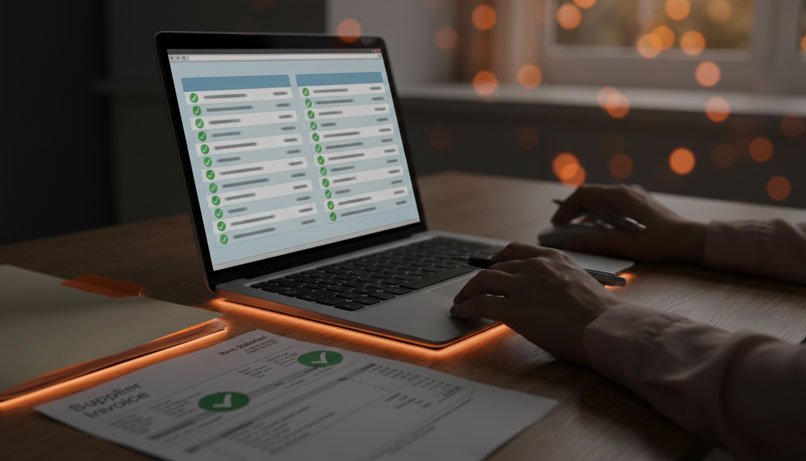
Vendor invoices have to be recorded, received, tracked, and ultimately paid. In a highly-competitive business with numerous suppliers, doing that manually could become the company’s own administrative task.
Automating accounts payable can streamline the process, cutting down on repetitive tasks such as handling invoices and payment information. The user can have an accurate picture of debts that haven’t landed in their bank account through connected bookkeeping systems.
This is important since a bank’s balance when seen as a whole can appear healthier than the restaurant’s actual near-term position.
There could be a possibility that you’ve got $80,000 in your account at the moment. This amount could be different if it is impacted by other variables like rent as well as payroll, vendors and other obligations in the next few days.
This leads naturally to cash flow forecasting.
What will happen with our cash once we’ve received the funds we’ve expected and have fulfilled all of our obligations?
This distinction is crucial when deciding on which is the appropriate time to buy an additional purchase replacement of equipment, or keep the liquidity.
You might not have been rightfully entitled to all the money you thought.
Sales tax illustrates the point especially well.
Restaurants get money from clients, which they deal with in accordance with their tax obligations. If those dollars are mentally associated with operating cash, the balance in the bank can create a misleading sense of what’s there to be spent.
Records that are consistent support the tax compliance of sales while giving the management a better view of the restaurant’s finances.
This is one reason why restaurant accounting is better when financial obligations aren’t viewed as separate entities.
Prime cost affects margin. Vendor purchases affect COGS as well as future payments. Payroll is a factor that affects the percentage of labor and cash. Cash flow is affected by sales tax. P&Ls are used to record the financial performance. Forecasting can be helpful for managers.
The pieces are connected.
Bookkeeping Chef employs restaurant-specific reporting as well as system integrations to integrate these pieces. If you don’t want to spend their nights manually reconciling financial data, specialized outsourcing of bookkeeping can take on large portions of the accounting burden without having to remove the owner of the financial discussions.
The last sentence is vital.
It’s not for restaurant owners to stop looking at their accounts because they are handled by someone else. It’s essential that owners receive information so they can understand what’s going on.
If the P&L indicates that the establishment is earning money however the balance of the bank seems unbalanced, don’t assume the P&L may be inaccurate.
Ask what happened between them.
This will reveal more about your business than any number.