A disused wastewater liftstation can be located in a municipal. Pumps are nearing the end their useful lives, controls need modernization and the access hatch should be replaced. Although the concrete wetwell is structurally sound, it’s time to be modernized.
Should the station be totally removed? Not necessarily. One of the most important questions to ask is whether the existing infrastructure will support an efficient pumping system that is in line with the latest standards, without compromising reliability and future capacity.
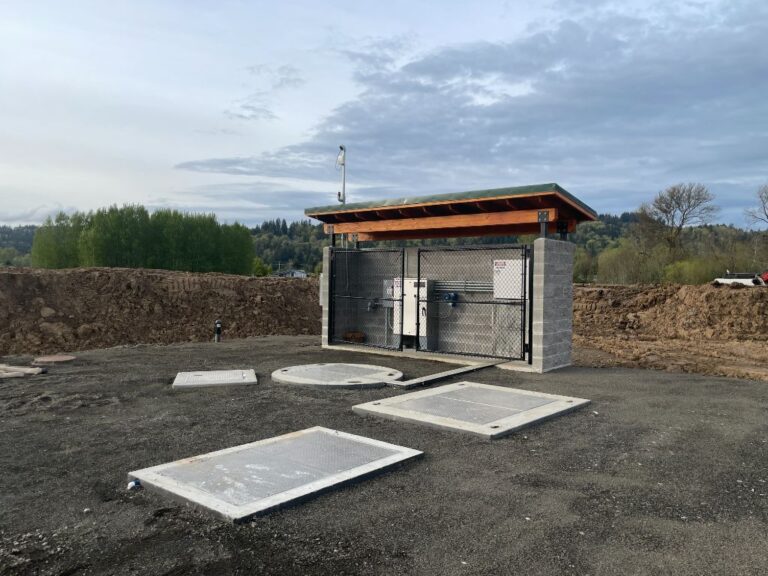
Image credit: romtecutilities.com
A carefully engineered pump station retrofit can preserve valuable infrastructure while replacing components that no longer meet operational requirements.
Start with the Structures Nobody Wants To Replace
The wet well is often one of the most expensive and difficult components to replace, as it’s hidden, connected to the existing piping and is essential to the collection of wastewater.
If the concrete structure is functional, it is possible to minimize excavation and construction work.
However, the deterioration of the access hatch could complicate the decision. Romtec Utilities says that wet well hatches are usually replaced as part of retrofits. It is possible to be more durable to repair the top slab instead of constructing a new hatch onto deteriorated concrete. This could increase the accessibility to the structure, and extend its utility, without having to replace the entire structure as well.
A Powerful Pump Changes the Engineering
If a neighborhood in the area has seen a significant increase in population since the original lift station was installed. It is possible that the current pumps are not sufficient to handle the increasing wastewater flow.
Pumps with higher horsepower could be used to upgrade the pumping station, however the equipment needs to fit within the system. The more powerful pumps could require modifications to discharge elbows, piping valves, electrical controllers as well as other components.
Engineers must also evaluate the requirements of the hydraulic system, including the head of flow and total dynamic head. If you choose to upgrade a pump without taking into account these requirements the system could cause operational problems rather than resolve them. Making plans for future capacity at the time of initial design makes later expansion considerably easier.
Make sure that the wastewater is kept moving during Construction
Retrofitting an existing water pump station could be an entirely new challenge. Unlike other equipment replacement projects, the station must continue to operate during construction.
Contractors are still working, and the wastewater will continue to flow. According to the study it is possible that a temporary bypass pumping system may be needed to keep service running while existing equipment is removed or new components are added.
Romtec Utilities accepted this challenge in the Federal Law Enforcement Training Center, Brunswick, Georgia.
The project involved the replacement of two older wastewater lifting stations, and keeping the operation of the facility. Site-specific engineering as well as packaged replacement systems and bypass pumping strategies were used to allow for the existing station footprints and operational needs. This example shows the need to be aware of construction sequencing before the construction process starts.
When replacement is the better option
Not every station is suitable to be renovated. If the sewer lift station requires replacement due to a badly deteriorated well, structural problems or major changes in hydraulic needs, it may be better to replace instead of modify.
It is vital that the choice taken into consideration structural requirements the compatibility of equipment and accessibility to construction, as well being long-term operational needs. Romtec Utilities begins retrofits and replacements by identifying the components to be left in place and the ones that require replacement.
The company will create custom-designed engineering plans as well as budget estimates and initial designs. Prefabricated parts are a great way to make installation easier and less time-consuming, as well as reduce the time spent on construction.
The Project is not Completion until the Pumps Have In Place
Modern lift stations must function as a system in one. Prior to returning the lift station to service, testing the startup and commissioning tests will ensure that the pumps, controls as well as other equipment are operating in accordance with the accepted specifications.
Operator training and operation and maintenance manuals are equally crucial. Maintenance staff must understand the latest equipment, operating procedure, and the documentation prior to taking over for the station.
A successful retrofit preserves the infrastructure, while addressing the weaknesses that forced modernization.
Municipalities and facility owners must be aware of the need for more than just immediate repairs. The most successful projects incorporate new equipment and existing structures. They maintain important services during construction and also prepare the pumping systems for a lifetime of operation.